
News

News

2DCC-MIP User Engages Undergraduate Researchers in Computational Studies of Metal Chalcogenides

Nov 18, 2025

Kate Plass, Professor of Chemistry at Franklin & Marshall College, is expanding research and educational opportunities for undergraduates through her group’s collaboration with the 2D Crystal Consortium–Materials Innovation Platform (2DCC-MIP) at Penn State.
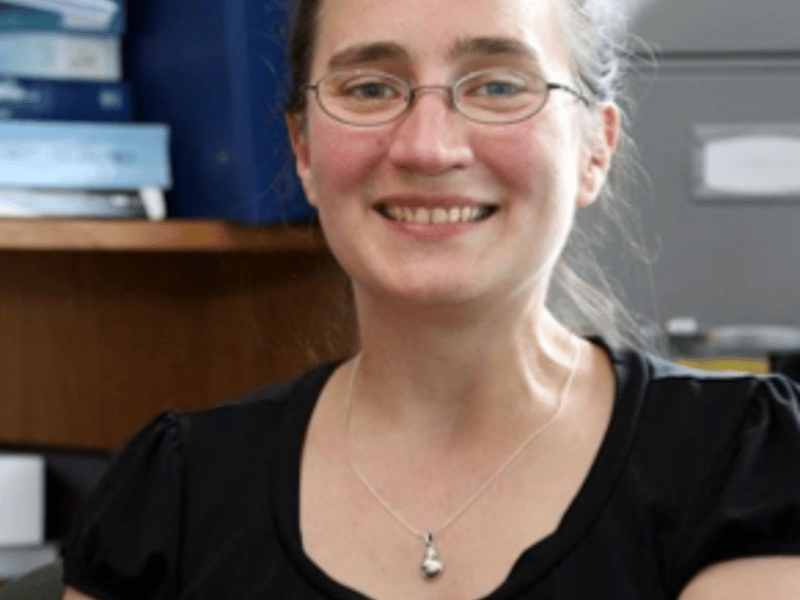
2DCC-MIP User Engages Undergraduate Researchers in Computational Studies of Metal Chalcogenides
News

UC Santa Barbara, UCLA’s BioPACIFIC MIP earns renewed NSF support to accelerate AI-driven biobased materials innovation

Aug 21, 2025

The U.S. National Science Foundation has renewed funding for BioPACIFIC MIP — Biomaterials, Polymers and Advanced Constructs from Integrated Chemistry Materials Innovation Platform — a collaboration between UC Santa Barbara and UCLA that provides a unique scientific ecosystem for the United States. This $19.8 million renewal empowers BioPACIFIC MIP to continue advancing the frontier of biobased materials, uniting synthetic biology, chemistry, automation and artificial intelligence to reshape how materials are discovered, designed and deployed.
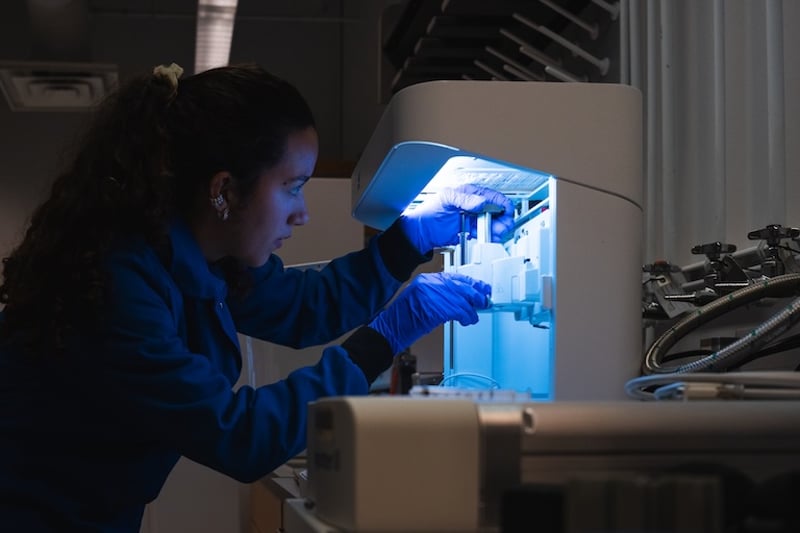
UC Santa Barbara, UCLA’s BioPACIFIC MIP earns renewed NSF support to accelerate AI-driven biobased materials innovation
News

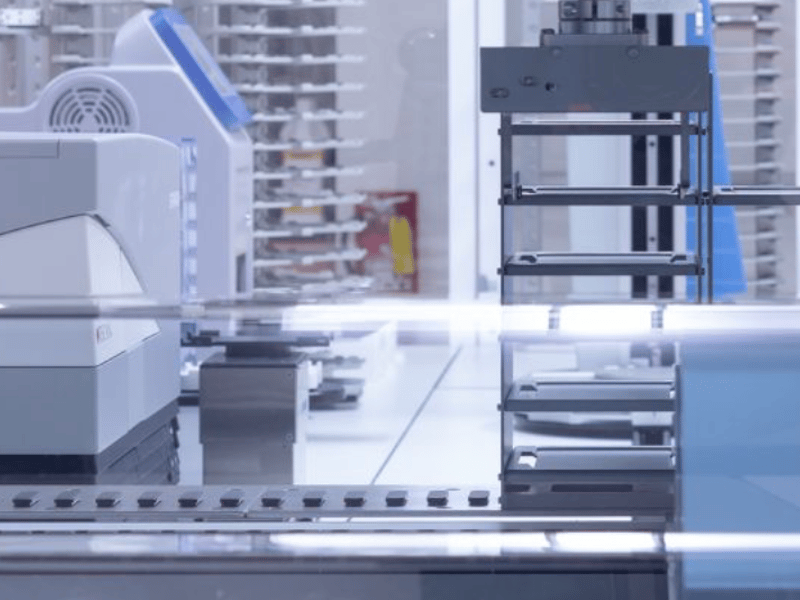
Collect plasmids — fast, easy and consistently — with BioPACIFIC MIP at UCLA Automated System
Jul 29, 2025
The BioPACIFIC MIP at UCLA offers an automated high-throughput system for isolating plasmid DNA from microbes. This platform enhances efficiency in research across biotechnology and life sciences, processing up to 96 minipreps simultaneously with minimal human intervention. Researchers can achieve high-purity plasmids swiftly, supporting various applications.
Collect plasmids — fast, easy and consistently — with BioPACIFIC MIP at UCLA Automated System
news

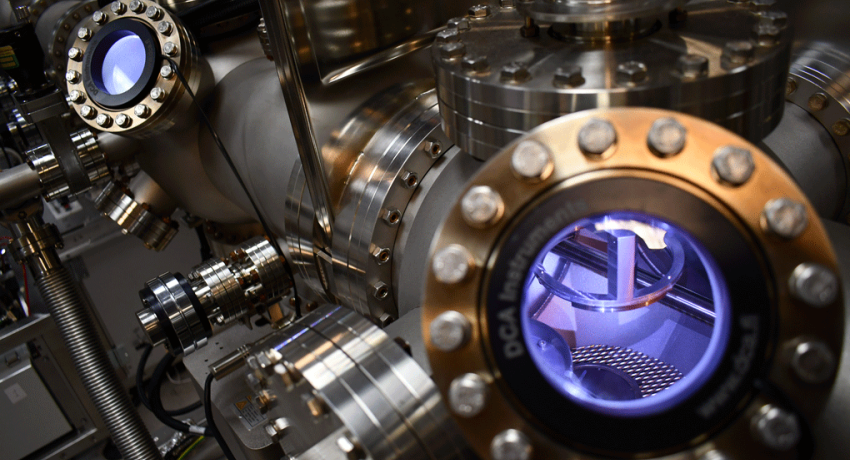
Tools of Discovery: How new equipment is powering research breakthroughs at Penn State
Jul 25, 2025
Penn State's advanced lab tools, including a unique double-crucible vertical Bridgman furnace and in situ testing capabilities, are enabling breakthroughs in materials science. These innovations allow researchers to grow ultra-pure crystals and study material behaviors in real-world conditions, paving the way for future technologies like advanced computing and flexible electronics.
Tools of Discovery: How new equipment is powering research breakthroughs at Penn State
news

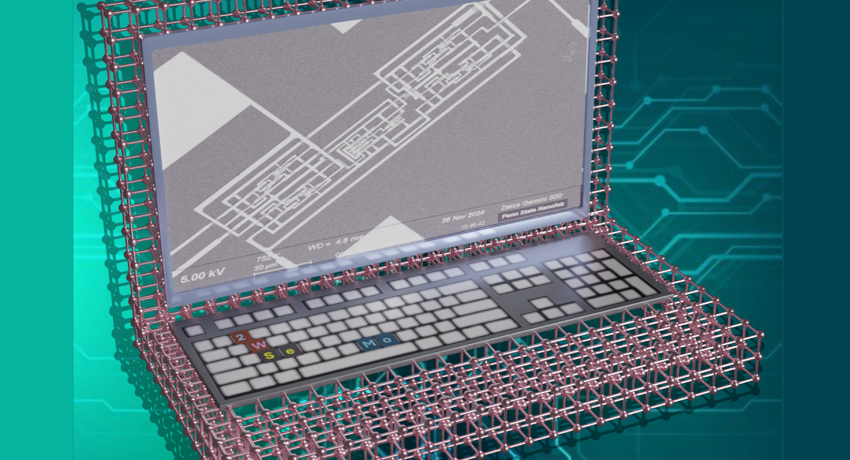
World’s first 2D, non-silicon computer developed
Jun 13, 2025
Researchers at Penn State have developed a CMOS computer using two-dimensional materials, marking a significant advancement in semiconductor technology. Unlike silicon, these materials maintain performance at atomic thickness. This innovation could lead to faster, energy-efficient electronics, emphasizing the potential of 2D materials over traditional silicon in future computing.
World’s first 2D, non-silicon computer developed
news

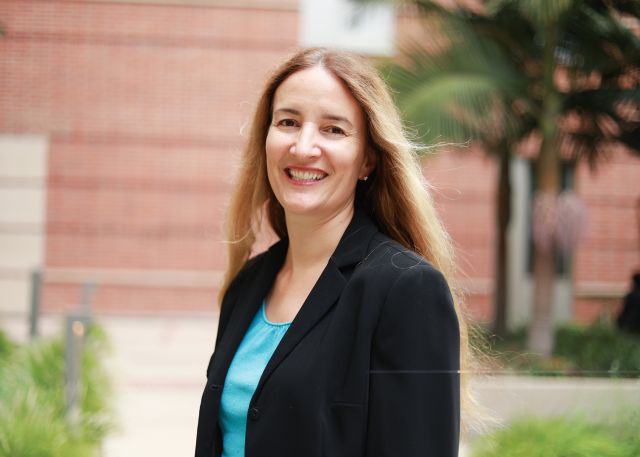
Heather Maynard elected to the National Academy of Sciences
Apr 29, 2025
UCLA Professor Heather Maynard has been elected to the National Academy of Sciences, recognizing her significant contributions to polymer chemistry and biomaterials. This honor highlights her impact on the scientific community and her dedication to innovation, aligning with BioPACIFIC MIP's mission.
Heather Maynard elected to the National Academy of Sciences
News

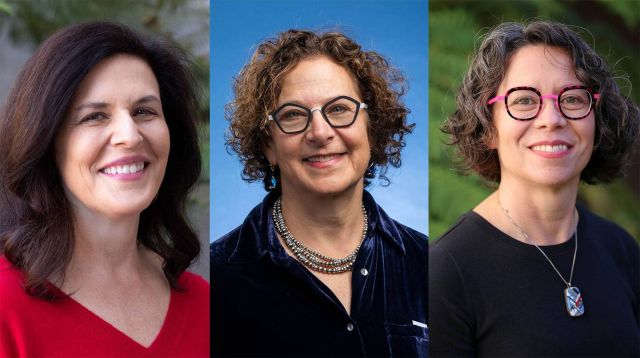
Rachel Segalman named fellow of the American Association for the Advancement of Science
Apr 2, 2025
Rachel Segalman of UC Santa Barbara has been elected a 2025 Fellow of the American Association for the Advancement of Science, recognizing her contributions to materials science and polymer engineering. She is one of 46 UC researchers honored, showcasing the university's leadership in scientific advancement.
Rachel Segalman named fellow of the American Association for the Advancement of Science
News

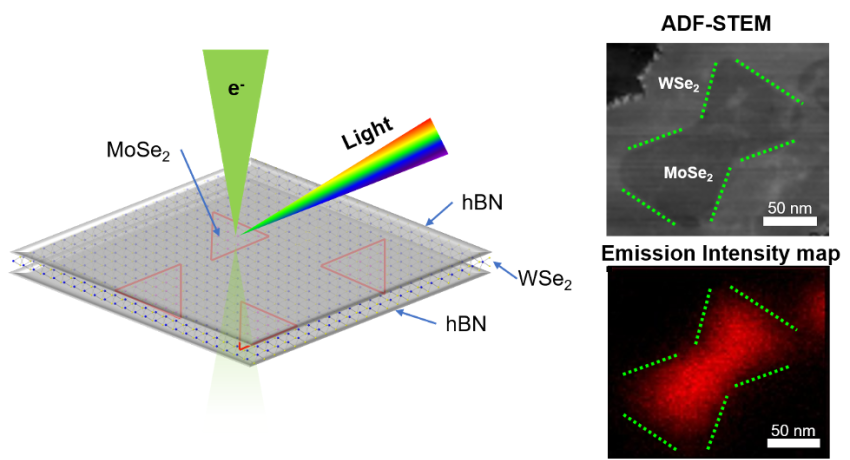
‘Nanodot’ control could fine-tune light for sharper displays, quantum computing
Mar 7, 2025
Researchers from Penn State and Université Paris-Saclay have developed precise control over light emitted from nanodots embedded in two-dimensional materials. This breakthrough could enhance high-resolution screens and advance quantum computing by manipulating light frequency and wavelength via quantum confinement. Their work involves combining different 2D materials to optimize light emission.
‘Nanodot’ control could fine-tune light for sharper displays, quantum computing
News

BioPACIFIC MIP Fellow Elizabeth Murphy Wins 2025 Henkel Award

Mar 3, 2025
BioPACIFIC MIP congratulates Elizabeth Murphy on winning the 2025 Henkel Award for Outstanding Graduate Research in Polymer Science. Her innovative research on block copolymers and contributions to the MIP community were pivotal. Murphy, set to graduate from UCSB in March 2025, will join Dow Chemical as a Senior Research Specialist.
BioPACIFIC MIP Fellow Elizabeth Murphy Wins 2025 Henkel Award
News

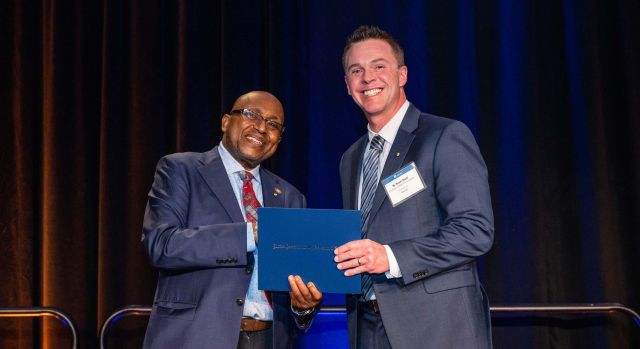
UCSB Professor M. Scott Shell named Fellow of the American Institute of Chemical Engineers
Feb 25, 2025
M. Scott Shell, a professor at UC Santa Barbara, has been elected a Fellow of the American Institute of Chemical Engineers for his pioneering work in multiscale modeling and computational techniques. This prestigious title recognizes significant professional accomplishments in the field of chemical engineering.
UCSB Professor M. Scott Shell named Fellow of the American Institute of Chemical Engineers
NSF Logo

This website is maintained collaboratively by teams supported by the Materials Innovation Platform awards, independent of the NSF. Any opinions, findings, and conclusions or recommendations expressed on this website are those of the team(s) and do not necessarily reflect the views of the National Science Foundation or the participating institutions.