News
Turning Beam Damage Into Beam-Enabled Chemistry
Electron beams are often treated as a problem in molecular electron microscopy: powerful enough to reveal structure, but also capable of damaging the very samples under study. A recent paper published in Angewandte Chemie International Edition suggests a different possibility: what if beam damage could be harnessed as beam-enabled chemistry?
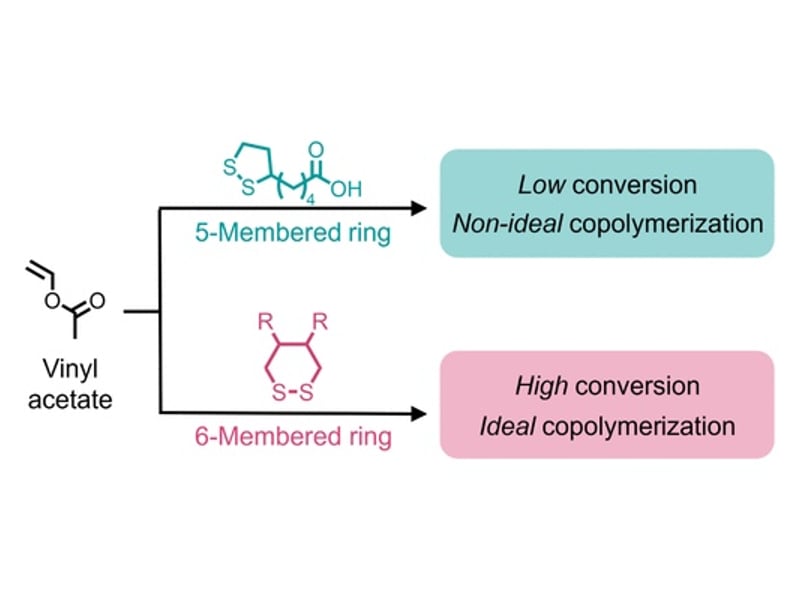
New Study Points to Degradable Commodity Plastics Without Changing Manufacturing
Researchers from UC Santa Barbara’s BioPACIFIC MIP have reported a new route to making commodity plastics more sustainable without requiring major changes to existing manufacturing methods.
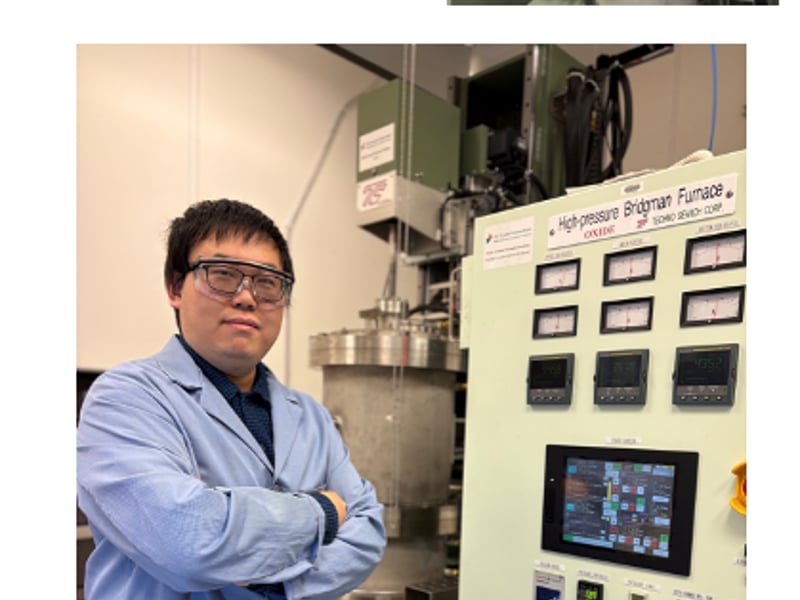
A First-of-Its-Kind Crystal Growth Method Advances Stoichiometry Control at Penn State
Large single crystals with precise stoichiometry control are the cornerstones of modern-day microelectronics, global positioning systems, optical communications, energy harvesting, etc. In addition, fundamental research also relies heavily on ideal single crystals to access intrinsic properties. One central challenge in crystal growth by conventional techniques such as Czochralski and Bridgman is that large, high-quality crystals can be grown only for congruent melting compositions where the solid and liquid compositions are the same.
Penn State scientists to lead three Genesis Mission projects

Penn State awarded $20M to lead an NSF ‘programmable cloud laboratory’

UCSB to Lead National Cloud Laboratory for Advanced Materials

Quantum material opens new path for studying unusual electronic behavior

Penn State names five new Evan Pugh University Professors

Director Javier Read de Alaniz Named AAAS Fellow

Karen Wooley elected to the 2026 Class of the National Academy of Engineering

BioPACIFIC MIP Expands Capabilities with Move to UCSB’s OASIS Facility

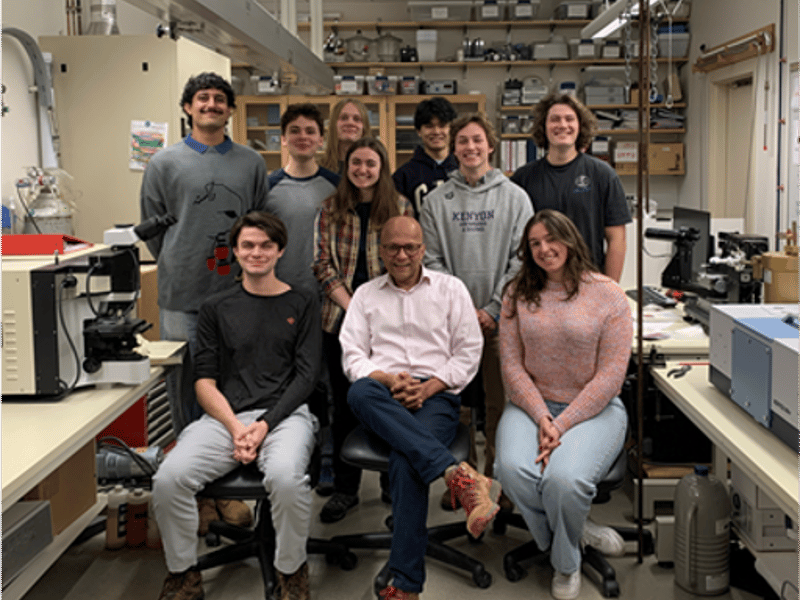
2DCC-MIP Collaboration Expands Undergraduate Research at Kenyon College
Frank Peiris, professor of physics at Kenyon College, is leveraging the capabilities of the 2D Crystal Consortium–Materials Innovation Platform (2DCC-MIP) at Penn State to engage undergraduates in cutting-edge studies of thin-film growth and electronic structure.
Q&A: Growing Novel Ultra-Pure Materials for Tomorrow’s Electronics

Showing 1 to 10 of 114