News

News

Transistors Built From Ultra-Thin 2D Materials Take A Step Forward

Feb 3, 2021
Researchers at Penn State have demonstrated that two-dimensional materials, like molybdenum disulfide and tungsten disulfide, can be used to create smaller, more efficient transistors compared to traditional silicon. These advancements could lead to faster and more energy-efficient computers, addressing the growing demand for data processing and storage.
Transistors Built From Ultra-Thin 2D Materials Take A Step Forward
News

Announcing the 2021 BioPACIFIC MIP Fellows and Associates!
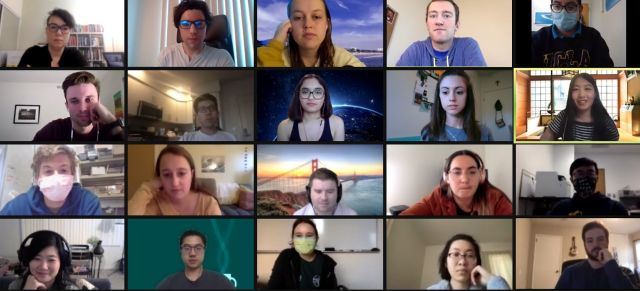
Feb 2, 2021
BioPACIFIC MIP has introduced its inaugural cohort of 25 Fellows and Associates, comprising graduate students and postdoctoral researchers from UCSB, UCLA, and UNC Chapel Hill. They will engage in research training, professional development, and networking. More information is available on the Education page.
Announcing the 2021 BioPACIFIC MIP Fellows and Associates!
News

PARADIM User Project Featured on Advanced Materials Cover

Dec 1, 2020

A PARADIM-supported study on electronic charge transport in spinels was selected for the frontispiece of Advanced Materials in December 2020.
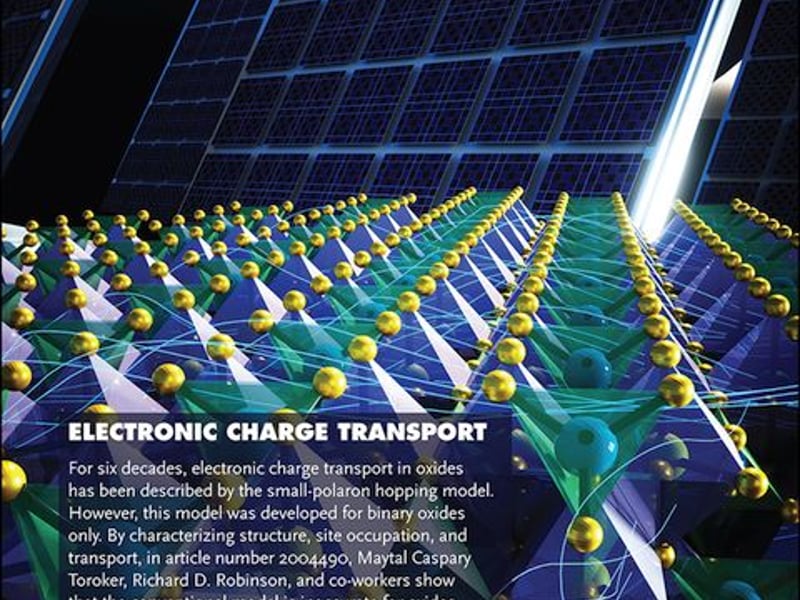
PARADIM User Project Featured on Advanced Materials Cover
News

PARADIM Postdoctoral Associate Jisung Park Receives 2nd Place in 2020 APL Materials Excellence in Research Award

Nov 30, 2020

Jisung Park was awarded second place in the 2020 APL Materials Excellence in Research Award for his work on fully transparent field-effect transistors.
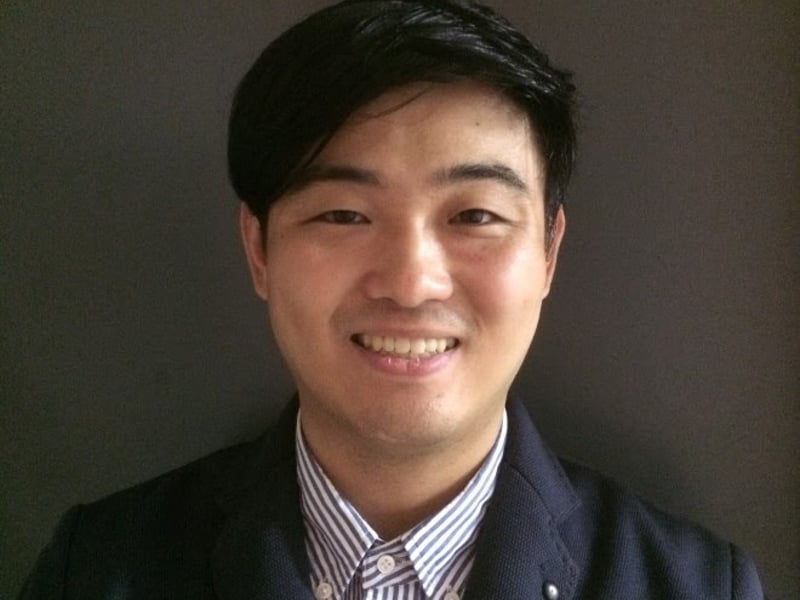
PARADIM Postdoctoral Associate Jisung Park Receives 2nd Place in 2020 APL Materials Excellence in Research Award
News

Darrell Schlom Receives 2021 APS James C. McGroddy Prize for New Materials

Oct 20, 2020

PARADIM Director Darrell Schlom was honored with the 2021 James C. McGroddy Prize for New Materials by the American Physical Society.

 Darrell Schlom Receives 2021 APS James C. McGroddy Prize for New Materials
News

PARADIM Users Win NAMBE 2019 Best Journal Paper Award

Sep 29, 2020

Dongxue Du, Patrick Strohbeen, and Jason Kawasaki received the NAMBE 2019 Best Journal Paper Award for their work on polymorphism control in LiZnSb thin films.
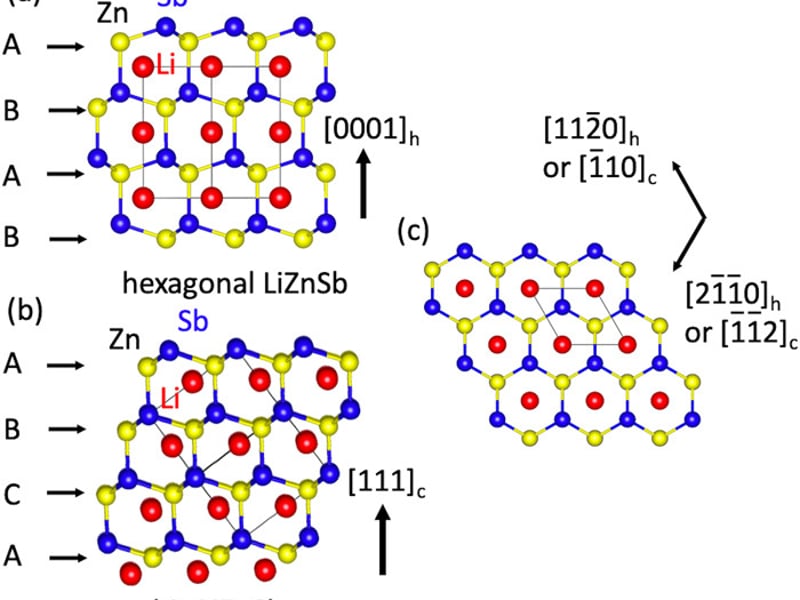
PARADIM Users Win NAMBE 2019 Best Journal Paper Award
News

Accelerating Research

Sep 5, 2020
The Center for Scientific Computing at UCSB is utilizing a $400,000 NSF grant to enhance scientific computing through a new GPU cluster. This technology supports research in bio-based materials and other projects, benefiting collaborations like the BioPACIFIC MIP, established with a $23.7 million NSF grant.
Accelerating Research
News

PARADIM Researchers Publish Thermodynamic Roadmap for Oxide MBE Sources

Aug 24, 2020

A comprehensive thermodynamic study by PARADIM in-house researchers evaluates the volatility of 128 binary oxides to guide source material selection for oxide MBE. Featured as an Editor’s Pick, the paper was also selected as the cover article for the August 2020 issue of APL Materials.
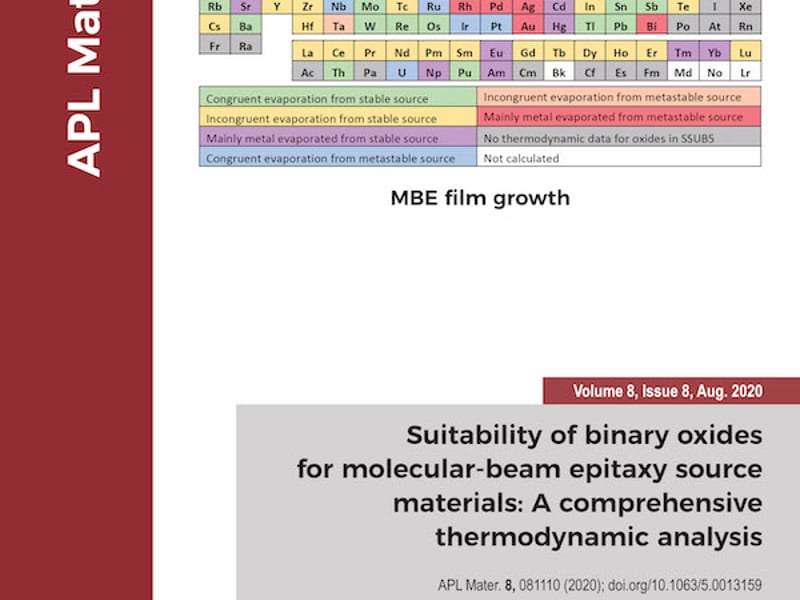
 PARADIM Researchers Publish Thermodynamic Roadmap for Oxide MBE Sources
News

David Elbert Delivers Talk "Streaming Towards Our Quantum Future" at 2020 Kafka Summit

Aug 24, 2020

PARADIM Chief Data Officer David Elbert delivered a talk at the 2020 Kafka Summit titled Streaming Towards Our Quantum Future.

David Elbert Delivers Talk
Press Release

UCLA, UCSB Share $23.7 Million Grant to Study Biologically Based Polymers
Jul 29, 2020
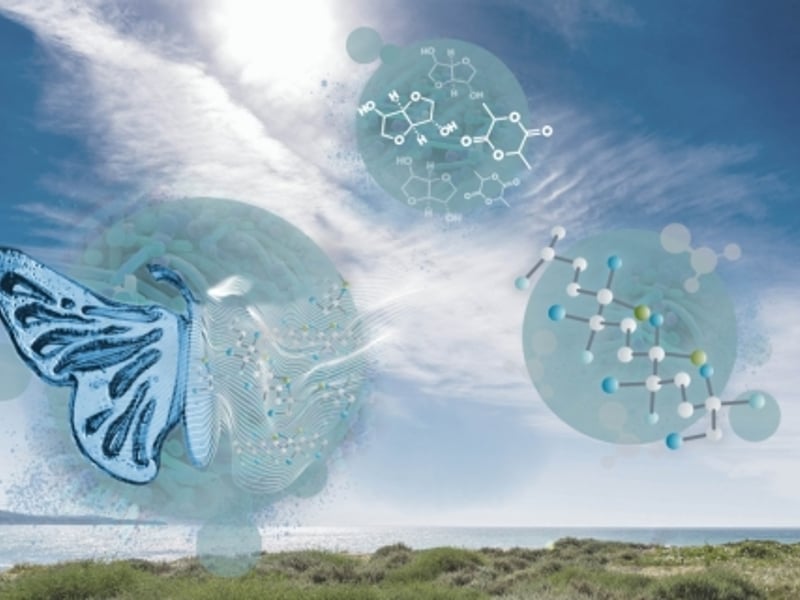
The National Science Foundation (NSF) has named UC Santa Barbara and UCLA joint partners in the BioPolymers, Automated Cellular Infrastructure, Flow, and Integrated Chemistry: Materials Innovation Platform (BioPACIFIC MIP). The five-year, $23.7 million collaboration is part of the NSF Materials Innovation Platforms (MIP) Program and has a scientific methodology reflecting the broad goals of the Materials Genome Initiative, which aims to develop new materials “twice as fast at a fraction of the cost.”
UCLA, UCSB Share $23.7 Million Grant to Study Biologically Based Polymers
NSF Logo

This website is maintained collaboratively by teams supported by the Materials Innovation Platform awards, independent of the NSF. Any opinions, findings, and conclusions or recommendations expressed on this website are those of the team(s) and do not necessarily reflect the views of the National Science Foundation or the participating institutions.